Connecting the Dots Between Inner Voice, Vitals & Comprehensive
Understanding the Body as a Whole Through Frequency-Based Wellness Education
One of the most valuable approaches to holistic wellness is recognizing that the body’s organs, glands, systems, emotions, and lifestyle habits are interconnected.
Rather than looking at one area in isolation, AO Scan provides an opportunity to explore patterns across multiple reports and use those patterns as starting points for wellness education.
The three primary reports we’ll explore are:
- Inner Voice – Emotional wellness patterns and suggested areas of support.
- Vitals – Frequency-based information organized into different functional categories.
- Comprehensive / Intelligent Scan Complete – A broader view of organs, glands, and systems, bringing information together for further exploration.
The goal is to connect information across these reports, identify meaningful questions, and explore supportive lifestyle practices.
1. Inner Voice: Exploring Emotional Wellness and Body Connections
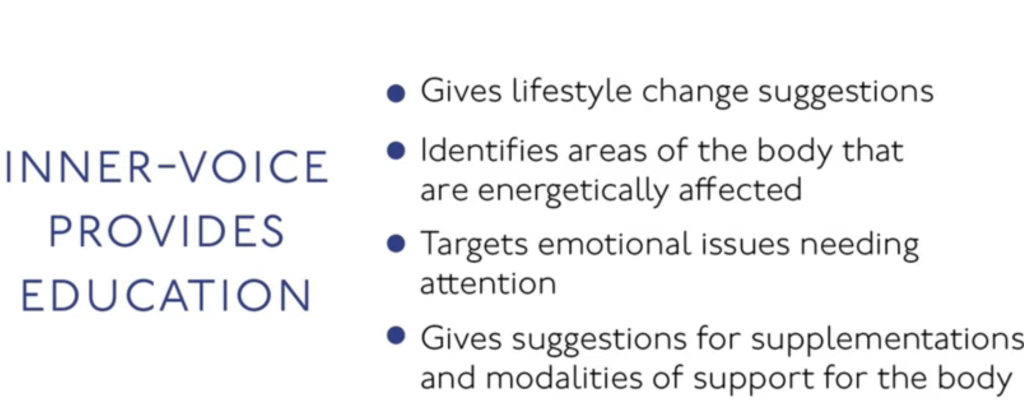
Inner Voice is designed to provide educational information in four primary areas:
- Lifestyle change suggestions.
- Areas of the body described as energetically affected.
- Emotional themes that may deserve attention.
- Suggestions involving supplementation and supportive wellness modalities.
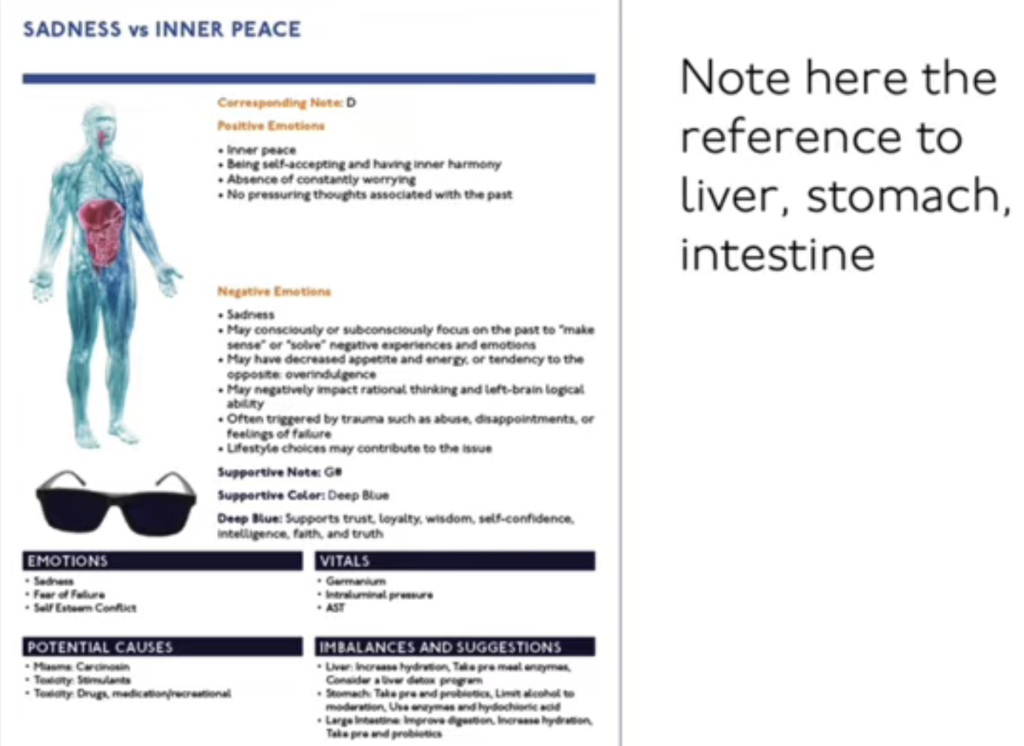
Example: Sadness vs. Inner Peace
The example highlights emotional themes associated with sadness and inner peace.
Positive emotional themes include:
- Inner peace.
- Self-acceptance and inner harmony.
- Reduced worry.
- Freedom from persistent thoughts about the past.
Negative emotional themes include:
- Sadness.
- Fear of failure.
- Self-esteem conflicts.
- Dwelling on past negative experiences.
- Disappointment or feelings of failure.
The report also references the liver, stomach, and intestines.
Why are these connections worth exploring?
Emotional well-being and digestive health can influence one another through recognized brain-gut communication pathways.
Stress can affect digestive sensations, appetite, and bowel habits. Digestive discomfort can also influence emotional well-being.
Practical wellness questions
When reviewing these patterns, consider asking:
- Have you been experiencing unusual emotional stress?
- Have you noticed digestive changes during stressful periods?
- Are you getting adequate sleep?
- Are you eating regularly and staying hydrated?
- Are there emotional concerns you would benefit from addressing?
These questions help connect emotional wellness with everyday habits.
2. Vitals: Exploring Digestive Function Categories
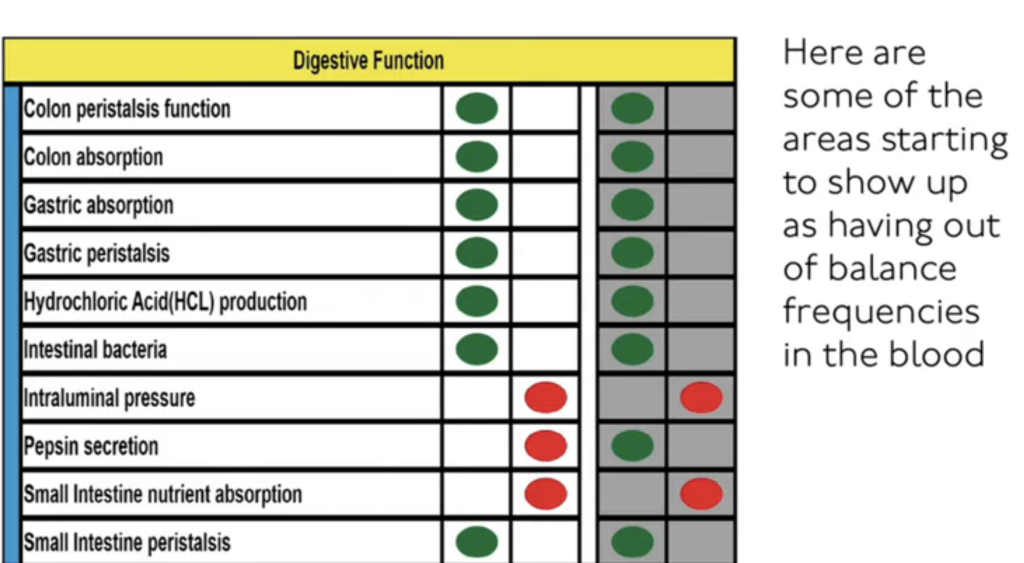
The Vitals report organizes information into categories associated with different functions and systems.
The digestive example includes:
| Digestive area | Function or topic |
|---|---|
| Colon peristalsis | Movement of material through the colon |
| Colon absorption | Absorption of water and electrolytes |
| Gastric absorption | Absorption processes associated with the stomach |
| Gastric peristalsis | Muscular movement of the stomach |
| Hydrochloric acid production | Stomach acid production |
| Intestinal bacteria | Microorganisms in the intestinal environment |
| Intraluminal pressure | Pressure within the digestive tract |
| Pepsin secretion | Production of a protein-digesting enzyme |
| Small intestine nutrient absorption | Absorption of nutrients |
| Small intestine peristalsis | Movement through the small intestine |
Understanding the color indicators
In the example, several categories are represented with green indicators, while others appear in red.
The red indicators appear beside:
- Intraluminal pressure.
- Pepsin secretion.
- Small intestine nutrient absorption.
Within the AO Scan reporting framework, these indicators draw attention to frequency categories for further exploration.
They should not be interpreted as proof of abnormal digestive pressure, inadequate pepsin production, or impaired nutrient absorption.
Connecting Vitals with Inner Voice
Suppose Inner Voice references the stomach and intestines, while Vitals highlights digestive categories.
This creates an opportunity to explore questions about the person’s digestive habits and symptoms.
Consider:
- Are they eating a balanced diet?
- Are they experiencing bloating or discomfort?
- Are they drinking enough water?
- Have they noticed reactions after certain foods?
- Are they experiencing constipation or diarrhea?
- Are they eating large meals close to bedtime?
The objective is to investigate lifestyle patterns without assuming the scan has identified a medical condition.
3. Intelligent Scan Complete: Bringing the Information Together
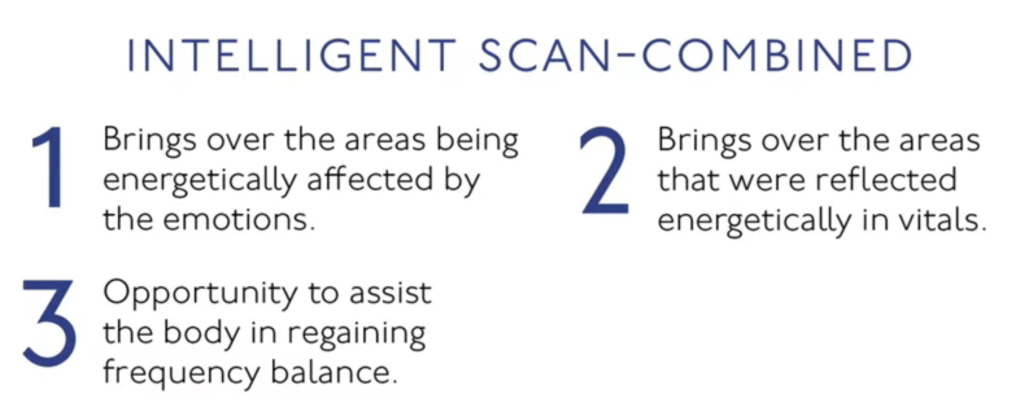
Intelligent Scan Complete is presented as a way of combining information across reports.
Its three primary functions are:
1. Bringing forward areas described as energetically affected by emotions.
This incorporates information associated with Inner Voice.
2. Bringing forward areas reflected energetically in Vitals.
This includes frequency categories identified in the Vitals report.
3. Providing an opportunity to support frequency balance.
The combined information is organized to help explore relationships among the body’s organs, glands, and systems.
Why connect the reports?
Looking at multiple categories encourages a broader wellness conversation.
For example:
- Inner Voice references the stomach and intestines.
- Vitals highlights digestive function categories.
- Comprehensive displays corresponding organ and system entries.
These relationships can help organize educational discussions about hydration, nutrition, stress, and digestive symptoms.
They do not independently establish a medical connection or confirm a disease process.
4. Understanding the Numbers in Comprehensive Reports
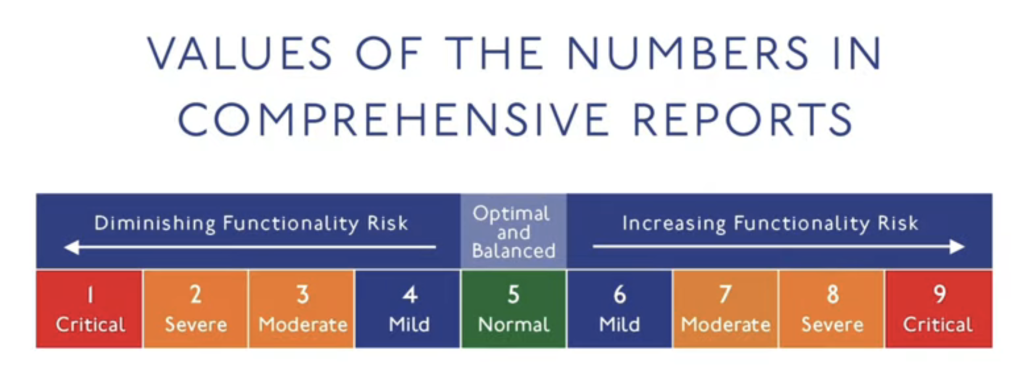
The Comprehensive report uses a numerical scale from 1 through 9.
Within the AO Scan system, 5 represents the central balanced reference value.
| Value | AO Scan classification |
|---|---|
| 1 | Critical – lower side |
| 2 | Severe – lower side |
| 3 | Moderate – lower side |
| 4 | Mild – lower side |
| 5 | Normal / Balanced |
| 6 | Mild – upper side |
| 7 | Moderate – upper side |
| 8 | Severe – upper side |
| 9 | Critical – upper side |
Understanding the two directions
Values 1–4: Diminishing Functionality Risk
These values move progressively farther from the central reference point on the lower side.
The AO Scan framework associates this direction with reduced-function frequency patterns.
Value 5: Optimal and Balanced
Five is the central reference value within the software’s scale.
Values 6–9: Increasing Functionality Risk
These values move progressively farther from the central reference point on the upper side.
The AO Scan framework associates higher values with patterns described as inflammatory or acute.
5. Comprehensive Report: Digestive System Example
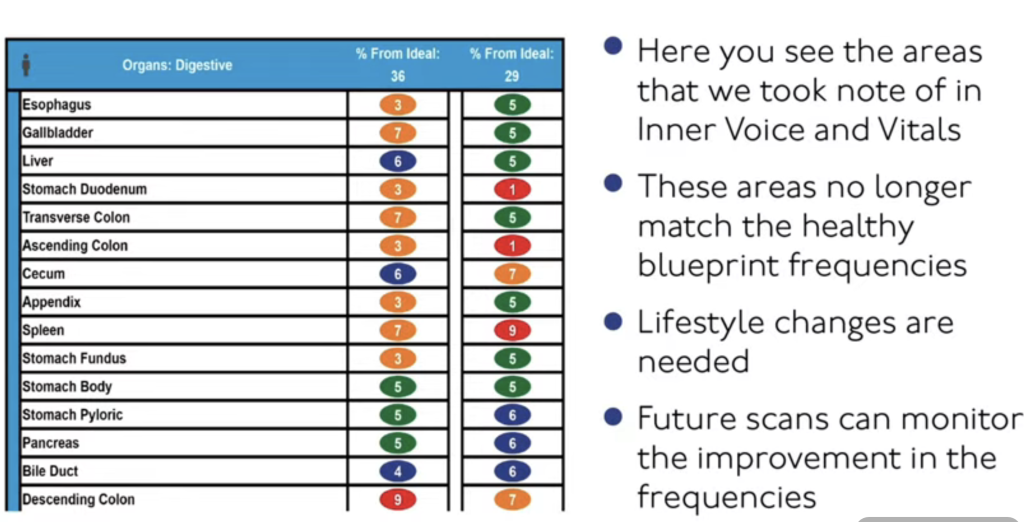
The digestive report provides an example of how frequency values are displayed across different anatomical categories.
The image contains two columns of numerical results.
| Digestive area | First value | Second value |
|---|---|---|
| Esophagus | 3 | 5 |
| Gallbladder | 7 | 5 |
| Liver | 6 | 5 |
| Stomach Duodenum | 3 | 1 |
| Transverse Colon | 7 | 5 |
| Ascending Colon | 3 | 1 |
| Cecum | 6 | 7 |
| Appendix | 3 | 5 |
| Spleen | 7 | 9 |
| Stomach Fundus | 3 | 5 |
| Stomach Body | 5 | 5 |
| Stomach Pyloric | 5 | 6 |
| Pancreas | 5 | 6 |
| Bile Duct | 4 | 6 |
| Descending Colon | 9 | 7 |
What can we observe?
Several entries differ from the central reference value of 5.
For example:
- The descending colon changes from 9 to 7.
- The stomach duodenum changes from 3 to 1.
- The ascending colon changes from 3 to 1.
- The spleen changes from 7 to 9.
- The gallbladder changes from 7 to 5.
These differences demonstrate how values can vary between the two displayed columns.
Understanding the concept of a healthy blueprint
AO Scan uses internal reference frequencies described as a healthy blueprint.
Values are compared against these references and displayed on the numerical scale.
The system describes values closer to 5 as more balanced.
However, matching an internal reference frequency is not the same as demonstrating normal organ function through validated medical testing.
6. Turning Report Information Into Practical Wellness Education
The greatest practical value of discussing these categories is the opportunity to explore everyday habits.
Several important areas deserve attention.
A. Hydration
Water is essential for normal body function.
It supports:
- Blood circulation.
- Temperature regulation.
- Digestion.
- Nutrient transport.
- Kidney function and waste removal.
- Normal bowel function.
Inadequate fluid intake can contribute to constipation, particularly when stool becomes dry and difficult to pass.
Questions to ask:
- How much water are you drinking daily?
- Do you regularly feel thirsty?
- Is your urine frequently dark yellow?
- Are you experiencing constipation?
- Do you drink more water during hot weather or physical activity?
Hydration needs vary depending on body size, activity, climate, medications, and health conditions.
The objective is adequate hydration rather than encouraging everyone to drink the same amount.
B. Dietary Habits
Dietary choices influence digestive function and overall nutritional health.
Important considerations include:
- Adequate protein intake.
- Dietary fiber.
- Fruits and vegetables.
- Healthy fats.
- Appropriate meal portions.
- Regular eating patterns.
- Individual food tolerances.
Questions to ask:
- Are you getting enough fiber?
- Do certain foods consistently cause discomfort?
- Are you relying heavily on highly processed foods?
- Are you eating large meals immediately before bedtime?
- Are you getting enough variety in your diet?
Food sensitivities and allergies require appropriate evaluation. AO Scan frequency categories cannot diagnose them.
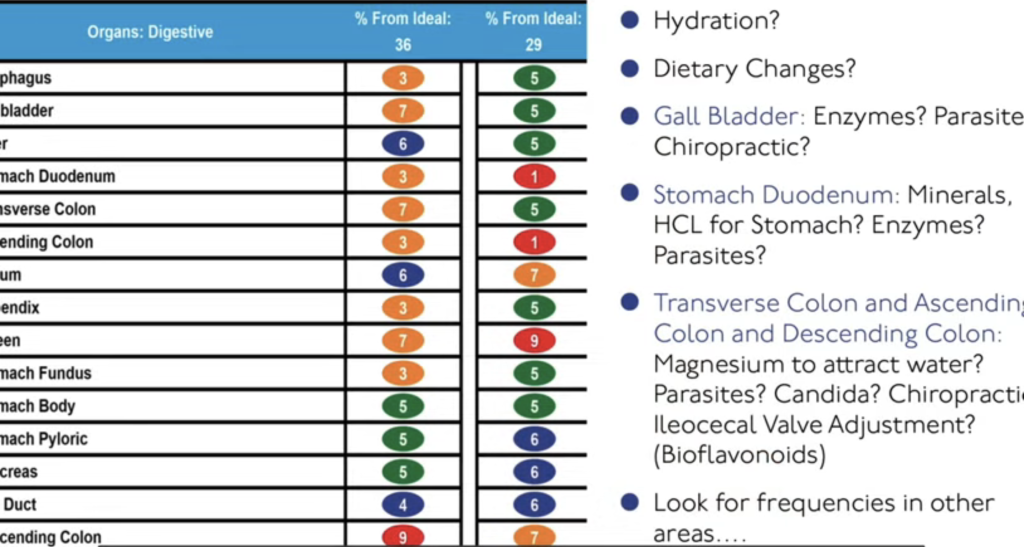
C. Gallbladder and Fat Digestion
The gallbladder stores and concentrates bile, which helps with fat digestion.
The Comprehensive example includes a gallbladder value of 7 in the first column and 5 in the second.
This can be used as a prompt to discuss digestive wellness, but the values do not establish gallbladder dysfunction.
Possible discussion topics:
- Digestive discomfort after fatty meals.
- Meal composition.
- History of gallbladder surgery.
- Digestive symptoms that require medical attention.
Digestive enzymes may be appropriate in certain medically identified circumstances, but a frequency value alone does not establish a need for them.
Persistent upper abdominal pain, particularly with fever, vomiting, or jaundice, requires medical assessment.
D. Stomach and Duodenum
The duodenum is the first section of the small intestine.
It receives partially digested food from the stomach along with bile and pancreatic secretions.
This area plays an important role in digestion and nutrient absorption.
Educational topics include:
- Stomach acid and digestion.
- Digestive enzyme function.
- Nutrient absorption.
- Food tolerance.
- Meal timing.
The report’s stomach-duodenum values can prompt discussion, but they cannot determine stomach acid levels, mineral deficiencies, enzyme deficiencies, or parasitic infections.
Hydrochloric acid supplements should not be recommended solely from scan results, particularly because they may be inappropriate for people with certain gastrointestinal conditions.
E. Colon Health
The ascending, transverse, and descending colon are important components of the large intestine.
The colon helps absorb water and electrolytes and moves waste toward elimination.
Areas worth discussing include:
- Hydration.
- Fiber intake.
- Physical activity.
- Constipation.
- Diarrhea.
- Changes in bowel habits.
A person experiencing recurring constipation or diarrhea may benefit from a review of their diet, fluid intake, medications, and medical history.
Parasites, Candida overgrowth, and ileocecal valve dysfunction cannot be established from AO Scan frequency values.
These conditions require appropriate evaluation before considering targeted treatment.
7. Using the 3D Anatomy Viewer for Education
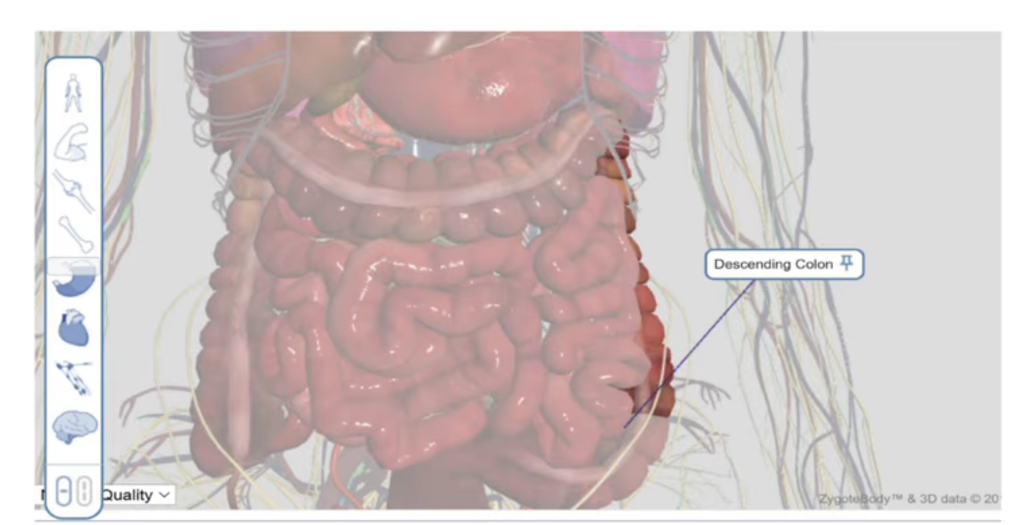
The 3D anatomy viewer offers a visual way to explore the body’s structures.
For example, selecting the descending colon allows the practitioner and client to see its anatomical location.
The model can help explain:
- Where the descending colon is located.
- How the large intestine is organized.
- How the small and large intestines relate anatomically.
- How digestive contents move through the gastrointestinal tract.
Making the conversation interactive
Rather than simply showing an image, use it to ask questions.
For example:
- Have you experienced discomfort in this general area?
- Do you notice changes in your bowel movements?
- Have your digestive habits changed recently?
- Are there particular foods that seem to affect your digestion?
The anatomy viewer can make complex information easier to understand.
It is a visual educational aid, not a tool for locating or confirming disease.
8. Connecting Emotional Wellness With Digestive Health
Returning to the Inner Voice example helps complete the broader wellness discussion.
The report identifies emotional themes involving sadness, self-esteem, worry, and inner peace.
It also references digestive areas.
The brain-gut connection
The brain and gastrointestinal tract communicate through neural, hormonal, and immune pathways.
Stress can influence digestive sensations and bowel habits, while persistent digestive symptoms can affect mood and quality of life.
This is why it can be valuable to explore both emotional and physical well-being when discussing digestive concerns.
Consider these questions:
- Are you experiencing ongoing stress?
- Do digestive symptoms worsen during stressful situations?
- Are you sleeping well?
- Are you allowing time for relaxation?
- Are there unresolved emotional concerns affecting your daily well-being?
Supportive approaches may include stress management, relaxation techniques, physical activity, counseling when appropriate, and healthy daily routines.
Emotional support can complement medical care when physical symptoms are present.
9. Monitoring Wellness Patterns Over Time
One of the features of AO Scan is the ability to repeat scans and compare displayed values.
Within the software, users can observe whether frequency classifications move closer to or farther from the central reference value.
A practical approach
Step 1: Establish a starting point.
Review the available reports and document the person’s wellness goals.
Step 2: Explore lifestyle habits.
Discuss hydration, nutrition, physical activity, sleep, stress, and any symptoms.
Step 3: Identify realistic changes.
Choose manageable habits that the person can maintain consistently.
Step 4: Monitor real-world outcomes.
Pay attention to measurable factors such as bowel regularity, symptom patterns, energy, sleep quality, and relevant clinical measurements.
Step 5: Compare future reports.
Review the displayed AO Scan values as part of the software’s educational framework.
Changes in frequency scores should not be treated as proof that an organ has healed or that a medical condition has improved.
Why consistency matters
Sustainable wellness habits generally require repetition.
A person may benefit more from manageable daily improvements than from attempting numerous changes simultaneously.
10. The Whole-Body Approach to Wellness
A holistic approach recognizes that different aspects of health interact.
Digestive health, emotional wellness, sleep, nutrition, hydration, and physical activity all contribute to overall well-being.
Rather than focusing exclusively on one reported value, consider the broader picture.
Five important areas to explore
- Emotional wellness: Stress, mood, relationships, and coping strategies.
- Hydration: Adequate fluid intake for individual needs.
- Nutrition: Balanced meals, nutrient intake, and food tolerance.
- Digestive health: Bowel habits, discomfort, and changes in symptoms.
- Lifestyle: Sleep, movement, daily routines, and consistency.
AO Scan’s Inner Voice, Vitals, and Comprehensive reports can provide a structured framework for these educational conversations.
The most important distinction is understanding what the reports display versus what can be medically established.
Key Takeaways
- Inner Voice organizes emotional wellness themes and supportive suggestions.
- Vitals presents frequency categories associated with body functions.
- Comprehensive brings together information associated with organs, glands, and systems.
- The numerical scale runs from 1 to 9, with 5 representing the software’s central balanced reference.
- Values outside 5 represent differences from the software’s reference frequencies, not confirmed medical abnormalities.
- Digestive categories can encourage conversations about hydration, nutrition, stress, and bowel habits.
- The 3D anatomy viewer helps explain the location and relationships of body structures.
- Repeated reports can display changes in frequency classifications, but these changes do not establish clinical improvement.
- Concerning or persistent symptoms should be evaluated by a qualified healthcare professional.
Final Thought
The body is interconnected, and meaningful wellness education considers the whole person.
Emotions, nutrition, hydration, digestion, movement, and lifestyle habits all deserve attention.
By connecting information thoughtfully, asking meaningful questions, and encouraging sustainable healthy choices, we can help people become more informed and proactive participants in their wellness journey.
The goal is not to diagnose through frequency reports, but to educate, encourage, and support healthy lifestyle decisions.